
 Lettering designer Michael Clark and I began our careers in the same town around the same time—Richmond, Virginia, he in the early 1980s, me in the mid 1970s. We only worked together a couple of times but we traveled the same circles and were friends for years.
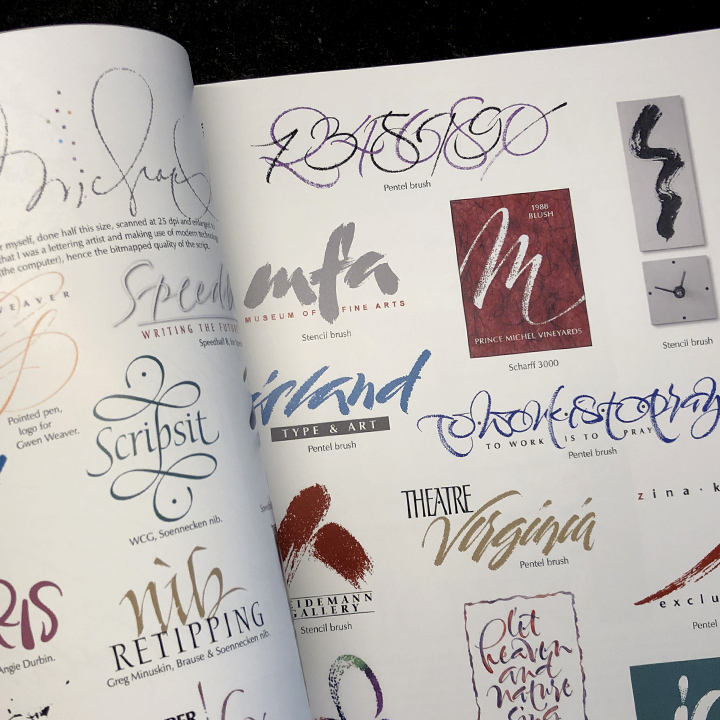
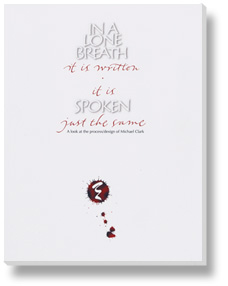
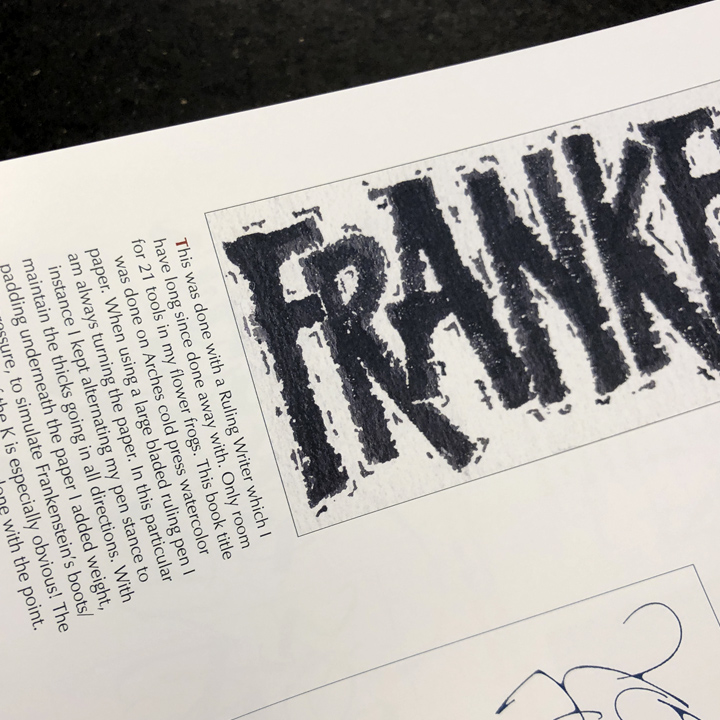
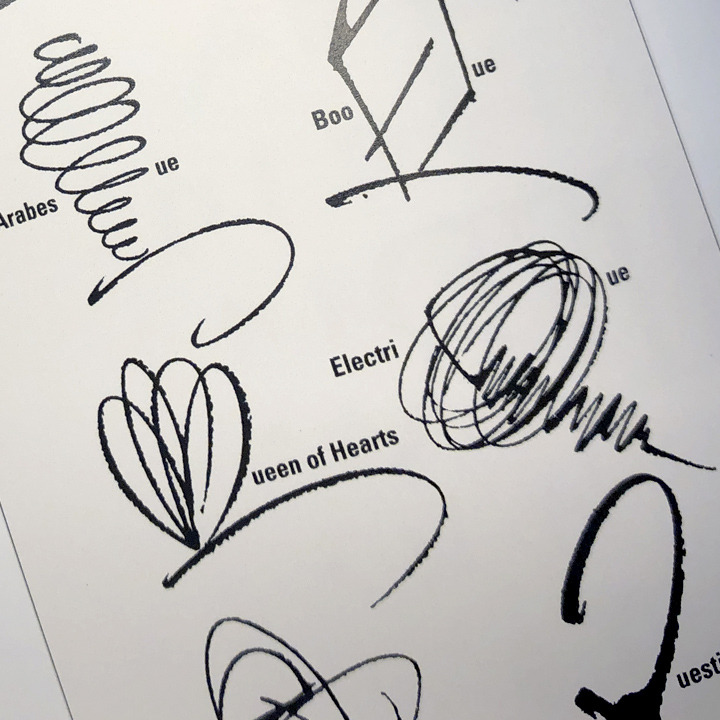
I’ve pointed you to his work several times in the past and on the occasion of his book in 2019: In a Lone Breath it is Written—It is Spoken Just the Same—a 72-page compilation of Michael’s work interspersed with insights into his inspiration, design sense, and process. I’ve sampled a few of the pages below.
As Michael would have told you, he’s was a lettering artist first and a calligrapher second—though he clearly loved freeform, un-retouched calligraphy, his real talent was in creating roughs or “skeletons” of letters and then in perfecting them through craft and finishing.
And though he credited many who have influenced him, he was passionate about remaining autonomous. There were times, he told me, that he even avoided studying the work of a particular artist because he did not want to be accused of copying their style. The proof of that is how unique is his work is—different tools, different mind, different outcome.
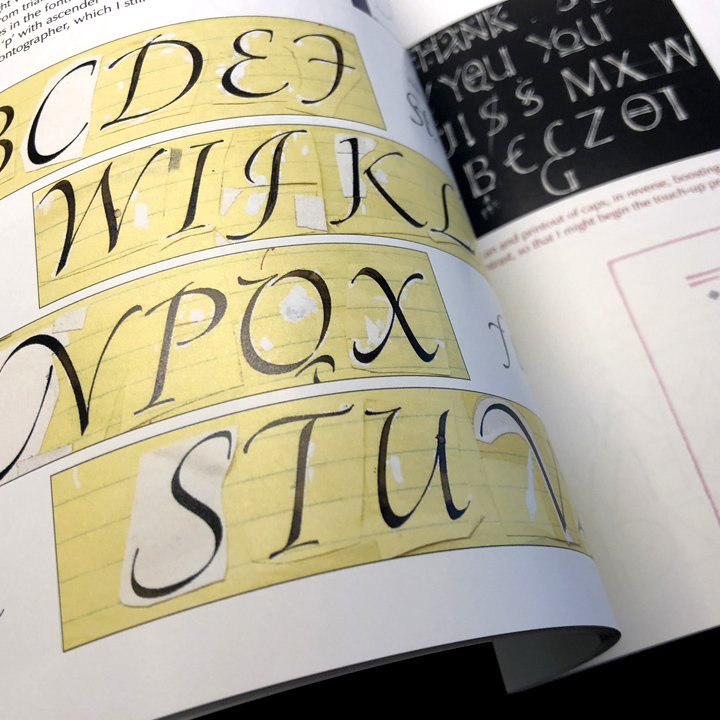
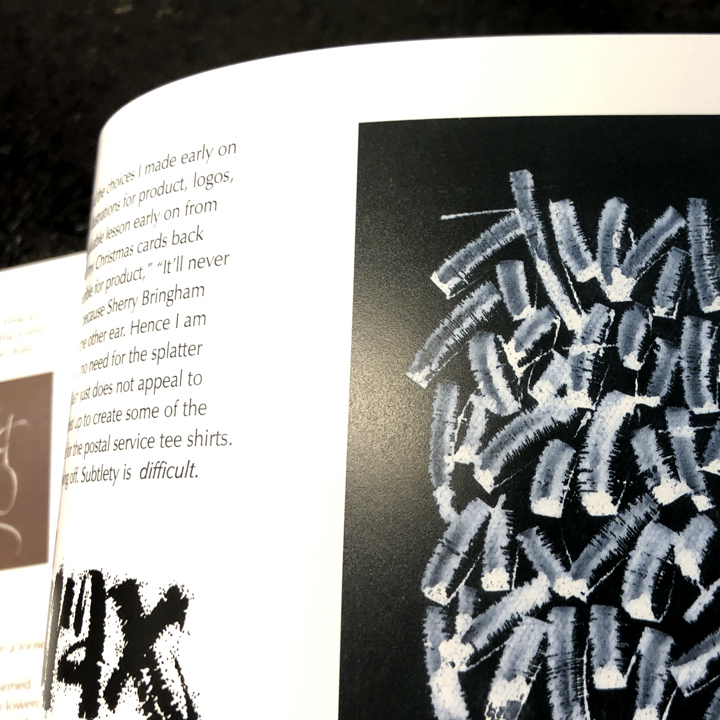
That said, he had a list of those he admired: among them Rick Cusick, Michael Podesta, Herb Lubalin for their design, Sherry Bringham, Fritz Poppl, and Werner Schneider for their calligraphy, and Hermann Zapf, Jose Mendoza y Almeida, and Gerard Huerta for their lettering design.
Using non-traditional tools in a traditional craft
In one meeting, we compared our experience with ruling pens—for the uninitiated, a ruling pen is a device that traps ink in a slot between two flexible metal jaws that you can taper to produce various line widths.
In prehistoric times, I told him, I used a ruling pen for creating crop marks but traded it in for a Koh-I-Noor Rapidograph technical pen when I discovered them in the 1970s. Michael on the other hand, the consummate craftsman, still had his first and favorite ruling pen and, until his retirement, maintained it and a 4×0 Koh-I-Noor Rapidograph to perfect his lettering and for touch-up.
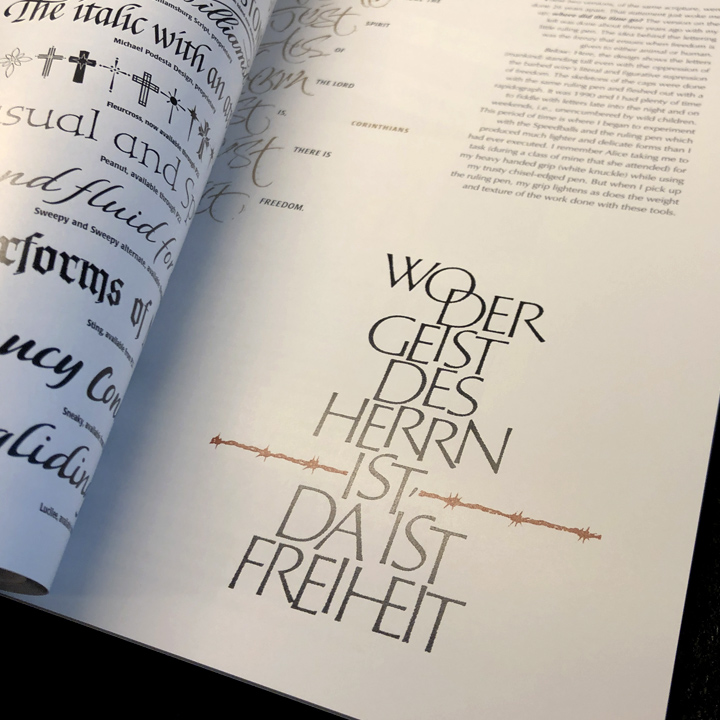
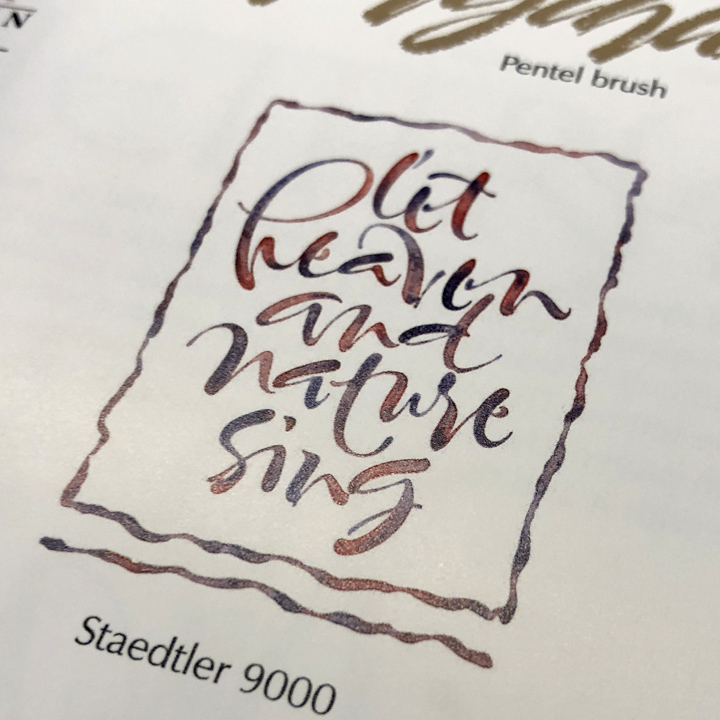
Later, he began experimenting with, and ultimately became an expert with, Speedball A and B nibs. In the book he refers to this nib and that, round and square, used to produce this and that effect. He developed such an expertise in contemporary forms using those tools that his work is included in the famous Speedball Textbook (now in it’s 25 Edition) and on the Speedball website.
Michael taught and lectured on his unique use of non-traditional tools in a traditional craft (ruling pens, stencil brushes, Speedball nibs, and so on) at calligraphic societies and universities around the world, from Australia and the Mariana Islands (where he established the typographic tone of a Chamoru culture magazine) to Sweden and the UK.
The work
Over the years Clark worked with a long list of corporations, book publishers, advertising agencies, and type foundries to develop typefaces and calligraphic illustrations. His work is found in the form of typefaces designed for a specific use (proprietary), such as the those used by Colonial Williamsburg and Phillip Morris (Altria), as well as commercial typefaces available through various foundries, now mostly consolidated by P22.
You’ll also find his work on many retail shelves. Firms as diverse as Dole, Alka-Seltzer, Kraft, Motts, Mueller’s, and Home Depot are among the many that have used his commercial typefaces to brand and label everything from pasta to zip lock bags.
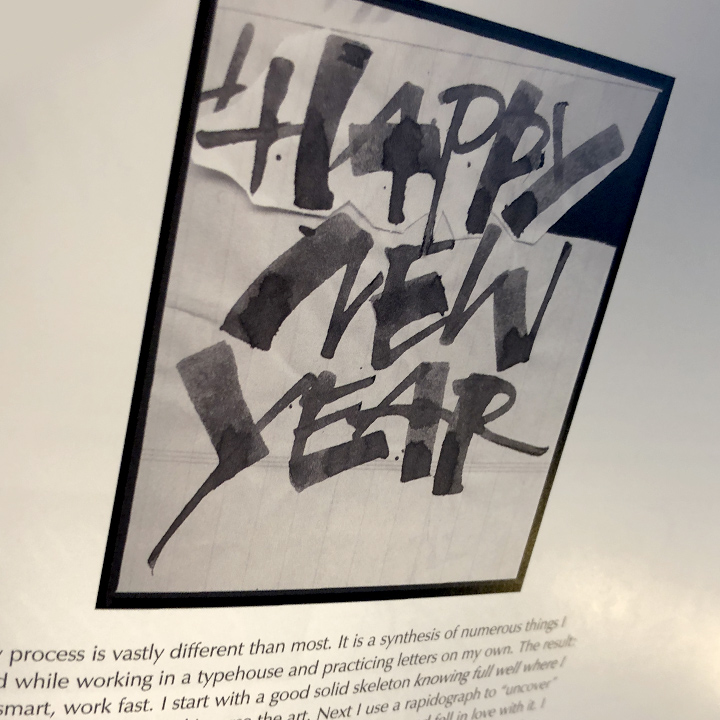
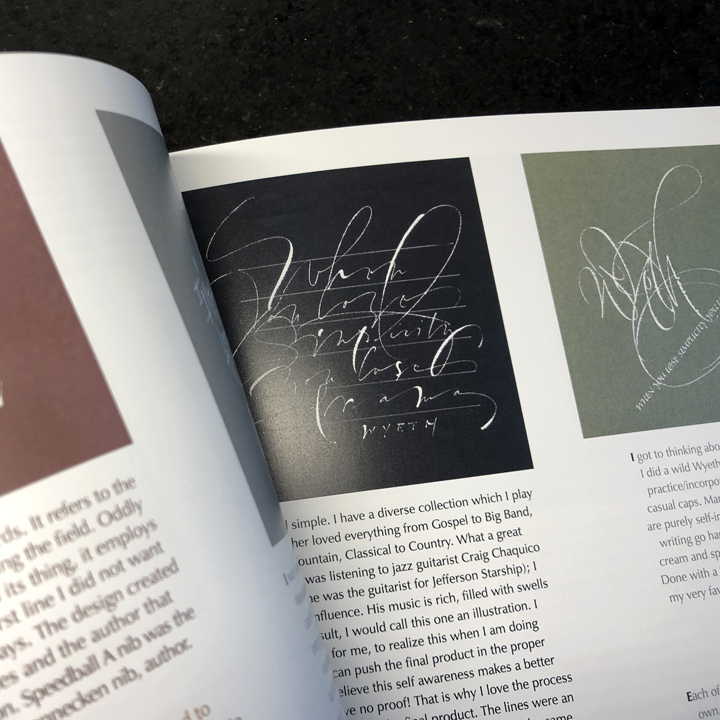
Michael also did a short stint at Hallmark where he caught the greeting card bug. So when I got an email from an order of Nuns looking for someone to design sympathy cards, I immediately thought of Michael Clark. It turned out to be a fortunate stroke of serendipity. He ended up working with the Sisters of St. Clare for two decades creating cards that, I am certain, touched many people in their times of need.
On Michael’s passing
Michael passed away on February 26, 2024 after a long bout with Parkinson Disease.
Though we lived just a few miles apart, we rarely visited each other. Instead, he would call out of the blue and we’d talk. And talk. And make the world right regarding typography, advertising, marketing, gardening, politics, and theology.
Our last meeting was in my driveway when is son brought him by to deliver a copy of his book. He was suffering much at the stage and the meeting was brief.
Take note of my friend Michael Clark–he was a good man, a believer in Jesus Christ, who cared deeply about many things.
Book: In a Lone Breath it is Written…
Some of his typefaces are available through P22…
If you’d like to see much of the work he most admired, check out the journal he edited for the Washington Calligraphers Guild: Scripsit…
An introduction to Michael’s work and influence by fellow calligrapher Randall Hasson…
Updated in APRIL 2026 / Posted in AUGUST 2019 / Chuck Green is a contributor to numerous magazines and websites, and the author of books published by Random House, Peachpit Press, and Rockport Publishers. All rights reserved. Copyright 2007-2026.