<?xml version="1.0" encoding="utf-8"?>
<rss version="2.0">
   <channel>
      <title>Ideabook.com Tutorials</title>
      <link>http://www.ideabook.com/tutorials/</link>
      <description>Graphic design tutorials on how-to design logos, brochures, websites, direct mail, and other types of marketing.</description>
      <language>en</language>
      <copyright>Copyright 2009</copyright>
      <lastBuildDate>Wed, 30 Sep 2009 19:10:28 -0500</lastBuildDate>
      <generator>http://www.sixapart.com/movabletype/?v=4.2-en</generator>
      <docs>http://blogs.law.harvard.edu/tech/rss</docs> 

      
      <item>
         <title>Tall news</title>
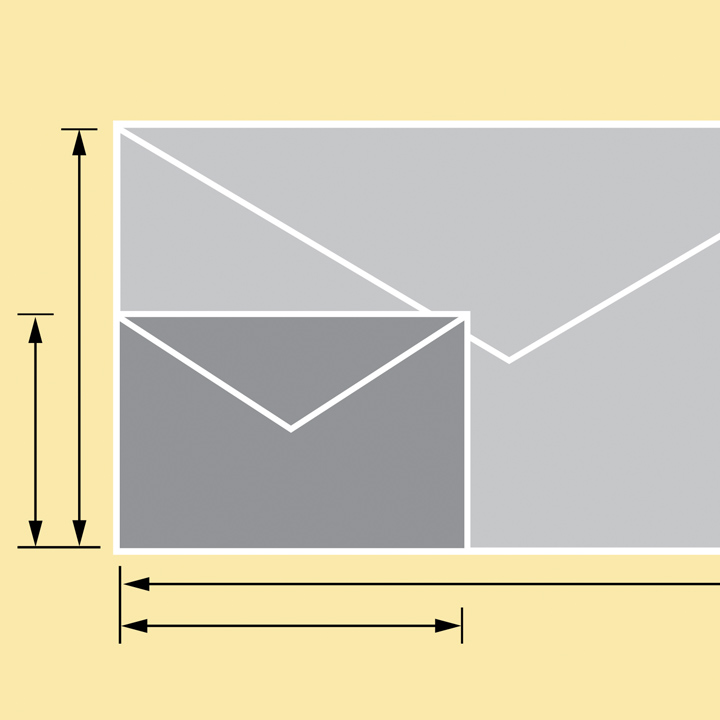
         <description><![CDATA[<p>BY CHUCK GREEN Think outside the box. Does a newsletter have to be 8.5 inches wide and 11 inches high? Does it have to have a nameplate at the top of the cover with an article below it? Does it have to present 2.5 articles per page?</p>]]></description>
         <link>http://www.ideabook.com/tutorials/print_design/tall_news.html</link>
         <guid>http://www.ideabook.com/tutorials/print_design/tall_news.html</guid>
         <category>Print Design</category>
         <pubDate>Wed, 30 Sep 2009 19:10:28 -0500</pubDate>
      </item>
      
      <item>
         <title>Create an out-of-the-ordinary booklet</title>
         <description><![CDATA[<p>BY CHUCK GREEN The book is a primary fiber of the information fabric. A form and function so deep-seated, new ways of delivering ideas, no matter how revolutionary, struggle against it. Even with the advent of the computer and Internet, I know few people who prefer it to reading from the printed page.</p>]]></description>
         <link>http://www.ideabook.com/tutorials/print_design/publish_or_perish_create_an_ou.html</link>
         <guid>http://www.ideabook.com/tutorials/print_design/publish_or_perish_create_an_ou.html</guid>
         <category>Print Design</category>
         <pubDate>Wed, 01 Jul 2009 21:48:00 -0500</pubDate>
      </item>
      
      <item>
         <title>The word works palette</title>
         <description><![CDATA[<p>BY CHUCK GREEN The &ldquo;word works&rdquo; palette uses vivid colors and the beauty of elegant typefaces to do the job typically delegated to illustrations and photographs. And it is economical.</p>]]></description>
         <link>http://www.ideabook.com/tutorials/design_palettes/the_word_works_palette.html</link>
         <guid>http://www.ideabook.com/tutorials/design_palettes/the_word_works_palette.html</guid>
         <category>Design Palettes</category>
         <pubDate>Wed, 01 Jul 2009 19:26:15 -0500</pubDate>
      </item>
      
      <item>
         <title>Idea architecture</title>
         <description><![CDATA[<p>BY CHUCK GREEN How do you generate interest in a project without committing to a design&mdash;demonstrate the idea architecture. I created this flow chart recently as part of a proposal for a Web to an expert consultant. I used the page to communicate the big picture and linked to other sites to show the client examples of how we might handle each subject. </p>]]></description>
         <link>http://www.ideabook.com/tutorials/web_design/idea_architecture.html</link>
         <guid>http://www.ideabook.com/tutorials/web_design/idea_architecture.html</guid>
         <category>Web Design</category>
         <pubDate>Wed, 01 Jul 2009 10:27:29 -0500</pubDate>
      </item>
      
      <item>
         <title><![CDATA[Sell your site with a &ldquo;Webcard&rdquo;]]></title>
         <description><![CDATA[<p>BY CHUCK GREEN No matter what we offer online, in many if not most cases, we have yet to reach significant segments of our audience. As I see it, there are three obvious groups who are tough to reach:</p>]]></description>
         <link>http://www.ideabook.com/tutorials/print_design/sell_your_site_with_a_webcard.html</link>
         <guid>http://www.ideabook.com/tutorials/print_design/sell_your_site_with_a_webcard.html</guid>
         <category>Print Design</category>
         <pubDate>Mon, 01 Jun 2009 18:34:10 -0500</pubDate>
      </item>
      
      <item>
         <title>Object marketing</title>
         <description><![CDATA[<p>BY CHUCK GREEN Call it the profound power of &ldquo;free.&rdquo; I don't know if you're like me, but I get excited about receiving unsolicited gifts in the mail&mdash;little unexpected promotional items such as pens, booklets, CD's, mouse pads, coffee cups, and such. If I encountered them in a store, they would not likely even catch my eye, but send them to my mailbox and you've got my attention.</p>]]></description>
         <link>http://www.ideabook.com/tutorials/print_design/object_marketing.html</link>
         <guid>http://www.ideabook.com/tutorials/print_design/object_marketing.html</guid>
         <category>Print Design</category>
         <pubDate>Sat, 28 Mar 2009 21:03:10 -0500</pubDate>
      </item>
      
      <item>
         <title>Logo ideas&#58; A transparency project</title>
         <description><![CDATA[<p>BY CHUCK GREEN  Thought it would be fun to share one of the projects from my book <em>Design-It-Yourself: Graphic Workshop, A Step-By-Step Guide.</em> In addition to chapters on Establishing Your Mission, Do Some Research, Choosing Paper, and so on, the book includes 25 identity projects. The second half of the book focuses on newsletters. Here is one of the identity projects:</p>]]></description>
         <link>http://www.ideabook.com/tutorials/logo_design/design_it_yourself_graphic_workshop.html</link>
         <guid>http://www.ideabook.com/tutorials/logo_design/design_it_yourself_graphic_workshop.html</guid>
         <category>Logo Design</category>
         <pubDate>Sat, 28 Mar 2009 20:30:17 -0500</pubDate>
      </item>
      
      <item>
         <title>Advice for a new designer</title>
         <description><![CDATA[<p>BY CHUCK GREEN Some time back I was asked, &ldquo;What career advice can you offer to someone who wants to follow in your footsteps?&rdquo; Beyond seeking the counsel of a clinical psychiatrist, here's my answer.</p>]]></description>
         <link>http://www.ideabook.com/tutorials/1_view/advice_for_a_new_designer.html</link>
         <guid>http://www.ideabook.com/tutorials/1_view/advice_for_a_new_designer.html</guid>
         <category>1 View</category>
         <pubDate>Thu, 29 Jan 2009 13:14:22 -0500</pubDate>
      </item>
      
      <item>
         <title>Illustrated headlines</title>
         <description><![CDATA[<p>BY CHUCK GREEN What is so cool about design is that there is no such thing as not having enough to work with&mdash;budget, space, illustrations, and so on. If there is a limit, it is my imagination. And there's certainly nothing &ldquo;wrong&rdquo; with these headlines (figure 1)&mdash;but they sure grab more attention after I set them in an imaginary box (figure 2).</p>]]></description>
         <link>http://www.ideabook.com/tutorials/typography/illustrated_headlines.html</link>
         <guid>http://www.ideabook.com/tutorials/typography/illustrated_headlines.html</guid>
         <category>Typography</category>
         <pubDate>Mon, 19 Jan 2009 10:15:01 -0500</pubDate>
      </item>
      
      <item>
         <title>The designer&apos;s prep, print,and proof checklist</title>
         <description><![CDATA[<p>BY CHUCK GREEN The printing process can produce 1,000 examples of success as easily as it can produce 1,000 examples of failure. Whether you have your newsletter reproduced 100, 1,000, or 10,000 times, <i>you&mdash;by the way you prepare the material for the press, oversee the printing, and review the results&mdash;control the outcome.</i></p>]]></description>
         <link>http://www.ideabook.com/tutorials/print_design/the_designers_prep_print_and_p.html</link>
         <guid>http://www.ideabook.com/tutorials/print_design/the_designers_prep_print_and_p.html</guid>
         <category>Print Design</category>
         <pubDate>Fri, 17 Oct 2008 17:20:00 -0500</pubDate>
      </item>
      
      <item>
         <title>The form and function of folds</title>
         <description><![CDATA[<p>BY CHUCK GREEN Folds are as important to your brochure design as illustrations, typefaces, and color. A smart layout heightens the drama with which your message is revealed to the reader.</p>]]></description>
         <link>http://www.ideabook.com/tutorials/print_design/the_form_and_function_of_folds.html</link>
         <guid>http://www.ideabook.com/tutorials/print_design/the_form_and_function_of_folds.html</guid>
         <category>Print Design</category>
         <pubDate>Sat, 20 Sep 2008 23:50:23 -0500</pubDate>
      </item>
      
      <item>
         <title>Step-by-step logo</title>
         <description><![CDATA[<p>BY CHUCK GREEN I don't know about you but I love to see examples of how other designers work&mdash;they reveal better (or worse) ways of doing things and allow me to gauge whether my methods are mainstream or totally whacked-out. &ldquo;If anyone finds out how I obsess about this stuff,&rdquo; I tell myself, &ldquo;they'll stick me in a home.&rdquo;</p>]]></description>
         <link>http://www.ideabook.com/tutorials/logo_design/stepbystep_logo.html</link>
         <guid>http://www.ideabook.com/tutorials/logo_design/stepbystep_logo.html</guid>
         <category>Logo Design</category>
         <pubDate>Sat, 09 Aug 2008 14:28:00 -0500</pubDate>
      </item>
      
      <item>
         <title>The suicide of design</title>
         <description><![CDATA[<p>BY CHUCK GREEN  Recently and yet again, I was asked for a copy of a font. Someone I thought of as a legitimate designer asked me to e-mail a font I paid for so they would not have to. Though it has happened many times, this &ldquo;I'm a shoplifter so you must be one too,&rdquo; attitude never ceases to amaze (and insult) me. Is my attitude extreme? I think not. In fact, I believe the pilfering of images, fonts, and software is not just benign cheating or victimless crime, I think of it as professional suicide. Here's why:</p>]]></description>
         <link>http://www.ideabook.com/tutorials/design_business/the_suicide_of_design.html</link>
         <guid>http://www.ideabook.com/tutorials/design_business/the_suicide_of_design.html</guid>
         <category>Design Biz</category>
         <pubDate>Mon, 28 Jul 2008 19:08:23 -0500</pubDate>
      </item>
      
      <item>
         <title>How to design a smart, functional form</title>
         <description><![CDATA[<p>BY CHUCK GREEN  Would you ask a prospect with a specific need to listen to a laundry list of all the products and services you offer? Would you insist that a new customer provide you with detailed information that obviously doesn't apply to their needs? If you wouldn't do it in person, don't do it on paper. </p>]]></description>
         <link>http://www.ideabook.com/tutorials/page_layout/forms_that_function.html</link>
         <guid>http://www.ideabook.com/tutorials/page_layout/forms_that_function.html</guid>
         <category>Page Layout</category>
         <pubDate>Sun, 22 Jun 2008 23:16:40 -0500</pubDate>
      </item>
      
      <item>
         <title>How to design without deception</title>
         <description><![CDATA[<p>BY CHUCK GREEN  Do we have any responsibility for the messages we help to communicate? Everyone has run into a prospective client that wants to sell fantasy to people who are living in fact. The truth be told, many of us use the fantasy approach ourselves&mdash;I am the first to admit it. But is it possible to design without deception? You bet it is&mdash;here’s how:</p>]]></description>
         <link>http://www.ideabook.com/tutorials/1_view/how_to_design_without_deception.html</link>
         <guid>http://www.ideabook.com/tutorials/1_view/how_to_design_without_deception.html</guid>
         <category>1 View</category>
         <pubDate>Tue, 27 May 2008 11:53:34 -0500</pubDate>
      </item>
      
   </channel>
</rss>